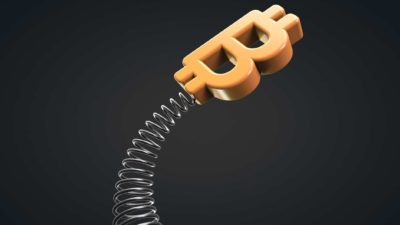
Flagship cryptocurrency Bitcoin (CRYPTO: BTC) has plunged 44.6% in value since its all-time high in November.
Such stomach-churning volatility would understandably test the faith of even the most ardent crypto fan.
But according to BetaShares digital assets head Justin Arzadon, nothing intrinsically has changed within Bitcoin.
"The current driver of price has been the hawkish stance of the Federal Reserve and the threat of aggressive interest rate tightening over the course of the year, which will impact US and global economies," he wrote on the BetaShares blog.
"The outlook has affected not just the crypto market, but also other risk assets such as high growth equities."

Image source: Getty Images
Tailwinds from 6 months ago are still there
Arzadon explained how all the factors pushing up Bitcoin 6 months ago still apply now.
"Although still in its infancy, hyperbitcoinisation has continued to take place. With more regulated products over bitcoin — such as ETFs — being introduced to the market, adoption by institutions and corporations has continued to grow," he said.
"A wave of banks around the world already offer, or intend to offer, the ability to access bitcoin straight from client bank accounts."
He admitted a 45% devaluation is "discouraging". But "large drawdowns" are part and parcel of owning crypto.
"Taking a look at the 10 worst drawdowns for bitcoin since 2011, Bitcoin has experienced pull-backs of over 50% six times, and over 40% four times — the worst being -93.7% over a duration of 163 days from peak to trough in 2011," said Arzadon.
"Each time, Bitcoin has rallied to eventually make new highs."
He added that historically the crypto market has been 5 to 7 times more volatile than the share market.
Bitcoin's journey to mainstream adoption
The rise of shares that are linked to the crypto world, Arzadon suspects, means digital currencies are more vulnerable to corrections in equities markets.
"Investors and institutions who may not have direct access to crypto or may not be allowed to invest directly tend to get exposure via crypto equities," he said.
"Unfortunately, these companies have borne the brunt of the sell-off in both crypto and the wider equities market."
One nation, El Salvador, made Bitcoin legal tender last year. Arzadon reckons other countries will follow.
"In El Salvador, there already are more people with bitcoin wallets (46%) than with bank accounts (29%)," he said.
"There are rumours that other South American countries will follow suit, so it would not be surprising to see additional nation-state adoption over the next few years."
Arzadon forecasts that the rise of non-fungible tokens (NFTs) and the metaverse would strongly promote the real-life value of crypto in 2022.
He noted NFT prices have not plummeted this year in line with shares and cryptocurrencies.
"Large corporates such as Adidas AG (ETR: ADS) and Nike Inc (NYSE: NKE) have continued to announce their involvement on a regular basis," Arzadon said.
"OpenSea, one of the largest NFT trading platforms in the world, set a new record in sales volume, having already surpassed $3.5 billion in sales — recorded in the value of Ethereum (CRYPTO: ETH) — from 1 January to 17 January."