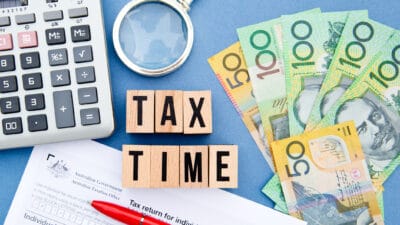
The Australian Taxation Office (ATO) has indicated that it's going to be paying closer attention to investors with ASX ETFs (exchange-traded funds).
There is a concern by the ATO that investors are not correctly reporting their income correctly.
Aussies own billions of dollars of ETFs like Vanguard Australian Shares Index ETF (ASX: VAS), iShares S&P 500 ETF (ASX: IVV) and Vanguard MSCI Index International Shares ETF (ASX: VGS).

Image Source: Getty Images
Why is the ATO worried about ASX ETF investors?
According to reporting by the Australian Financial Review, investors (particularly ones new to ETFs) may not be aware of what they should be reporting on their annual tax return and therefore could be incorrectly misreporting what their income is. They may also not be keeping good enough financial records.
The ATO believes that over 46,000 taxpayers may have incorrectly reported their capital gains tax liability, so it asked the taxpayer to review the return. In this modern world, the ATO is collecting more information from several locations such as registries, stockbrokers and managed funds, which reports data to the ATO.
The AFR quoted the ATO assistant commissioner, Tim Loh, who said:
ETFs generally do not pay their own tax. This is the responsibility of each investor. Due to the way taxpayers report income from ETFs, we cannot differentiate which capital gains, income or dividend amounts were realised from ETF investments by looking at a tax return.
What should investors know?
There are several different elements that investors may need to report on their tax return. Even if they don't sell the ASX ETF, each ETF can distribute different forms of income which all need to be reported on the tax return in different boxes such as dividends, franking credits, interest, foreign income and capital gains.
To help investors, ETFs do provide a distribution statement each year that should show taxpayers which labels to report the different income amounts in. Some of those different labels include foreign income and Australian income, net capital gains and non-taxable amounts.
The AFR reported that when an investor disposes of ASX ETFs, the standard distribution statement (SDS) will show the capital gains or losses made from the sale of the shares which also need to be included in a tax return.
It was also pointed out that distributions that were re-invested should also be reported as income.
Mr Loh said:
Generally speaking, taxpayers will typically need to declare distributions despite not withdrawing any money from their account.
Most people recognise that they must pay tax on any money earned from selling shares. But many don't realise that tax also applies to dividends and distributions, even if they are automatically reinvested into a reinvestment plan.
The ATO also points out that investors need to correctly calculate their capital losses or gains and record them in the tax return. Capital losses only happen when a sale actually happens, not when an investment falls but the investor still owns the share.
Capital losses can be used to offset capital gains, but not other income.
ASX ETF tax records to keep
The AFR included a handy list from the ATO of records that investors should keep to correctly report income on their tax return:
- The date of purchase/reinvestment.
- The purchase amount/value.
- Details of any non-assessable payments that could affect the amount of any capital gain, or loss, when the fund is sold.
- The date and amount of any call options (if shares were partly paid).
- The date of sale and sale price (if they are sold).
- Any brokerage costs or commissions paid to brokers.
- Details of events such as share splits, share consolidations, returns of capital, takeovers, mergers, demergers and bonus share issues.
- Details of capital losses made in previous years – investors may be able to offset these losses against future capital gains.
- Dividend or managed investment distribution statements (standard distribution statements).