Is a passive ASX investing strategy for you?

When should an ASX investor just stick to a passive, ETF-only share investing strategy? You mind find it a better fit for your own style

| More on:

You’re reading a free article with opinions that may differ from The Motley Fool’s Premium Investing Services. Become a Motley Fool member today to get instant access to our top analyst recommendations, in-depth research, investing resources, and more. Learn More

There are many investors out there who love the rough and tumble of investing in the share market. Buying, selling, finding your next big investment… these are all things that we investors find absolutely thrilling. But not all investors love the cut and thrust of the markets. Some people choose to invest passively. They want to share in the spoils of investing, but are unable or unwilling to 'do the work' of researching stock picks or analysing companies.

Instead, these 'passive investors' choose to invest solely in index exchange-traded funds (ETFs), such as the Vanguard Australian Shares Index ETF (ASX: VAS). This is typically done via a dollar-cost averaging (DCA) strategy, where the investor puts their investing on 'autopilot' by blindly investing a set amount of capital on a periodic basis (e.g. $100 a week or $1,000 a month).

Some investors choose to invest this way because it takes the 'emotional aspect' out of the game. Many people (understandably) simply can't handle the pressure of deciding what price to buy at. Thus, it's easier to automate the whole process with a consistent approach. But for many investors who try their hand at 'active investing', perhaps a passive approach would be better suited.

asx passive etf investor relaxing with feet up on desk

Image source: Getty Images

When is passive investing the best strategy?

We've already established that a passive ETF-only strategy is best for those investors who don't find investing interesting or fun, but still want to benefit from the compounding that the share market brings to the table.

But it might also suit those potential investors whose temperaments aren't suited to a long-term focused, active approach. The last thing you want to do is put yourself off investing entirely by losing money chasing unrealistic gains. It might look glamorous when one of your friends decided to bet the house on Zip Co Ltd (ASX: Z1P) shares and rakes in a massive gain when Zip goes from $6 to $10 (as is what happened last month). But this isn't too different from going to the casino and putting it all on red in my eyes. And it is not glamorous in the slightest when the odds cut the other way.

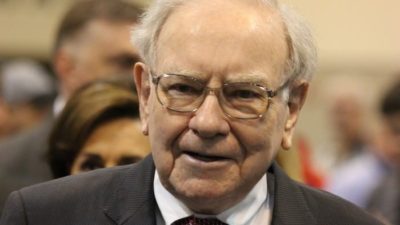
If you're a thrill-seeker and bring that attitude to the share market, a passive strategy might be a better way to go. The share market isn't a place for high-octane entertainment, in my opinion. Instead, as legendary investor Warren Buffett once said, it's instead a place where wealth is transferred from the impatient to the patient. If you're not 'the patient investor' that Buffett speaks of, chances are you'll end up funding someone else's retirement.

Foolish takeaway

But if you genuinely want to start a journey as an active share picker who looks for the best businesses to invest in, you can always start with ETFs and work your way up to finding individual companies as your experience grows. Understanding yourself is the first step to becoming a great investor. There's no shame in going for a passive approach if it suits you best. You'll still be far better off in the long run that those who don't invest at all.


Sebastian Bowen has no position in any of the stocks mentioned. The Motley Fool Australia's parent company Motley Fool Holdings Inc. owns shares of ZIPCOLTD FPO. The Motley Fool Australia has no position in any of the stocks mentioned. We Fools may not all hold the same opinions, but we all believe that considering a diverse range of insights makes us better investors. The Motley Fool has a disclosure policy. This article contains general investment advice only (under AFSL 400691). Authorised by Scott Phillips.

More on How to invest

A woman stands in a field and raises her arms to welcome a golden sunset.
ETFs

What is HALO investing and how do investors gain exposure to it?

Here's what investors need to know about the HALO framework.

Read more »

A woman holds her empty unzipped wallet upside down and dips her head to look under it to see if any money falls out of it.
How to invest

$0 in savings? I'd aim for $20k in annual passive income with 3 simple steps

These simple steps are all it takes.

Read more »

a group of business people sit dejectedly around a table, each expressing desolation, sadness and disappointment by holding their head in their hands, casting their gazes down and looking very glum.
How to invest

How to survive an ASX share market crash

A falling market can feel overwhelming. Here’s a simple framework for surviving an ASX share market crash and staying on…

Read more »

A man rests his chin in his hands, pondering what is the answer?
How to invest

6 rules for set-and-forget investing to fund your retirement goals

Ask yourself these questions to build a direct stock set-and-forget portfolio.

Read more »

A couple are happy sitting on their yacht.
How to invest

How to build $100,000 a year in passive income from ASX shares

Make the share market your own ATM with this strategy.

Read more »

A man sits wide-eyed at a desk with a laptop open and holds one hand to his forehead with an extremely worried look on his face as he reads news of the Bitcoin price falling today on his mobile phone
How to invest

What if the stock market crashes in 2026?

It always pays to prepare for the worst...

Read more »

Buy and sell keys on an Apple keyboard.
How to invest

Is it time to sell your ASX shares before things get worse?

It might be tempting to hit the sell button on a day like today...

Read more »

A mature aged couple dance together in their kitchen while they are preparing food in a joyful scene.
How to invest

3 ways to get from $100,000 to $1 million in retirement savings

Once you reach $100,000 in savings, building toward $1 million becomes easier.

Read more »