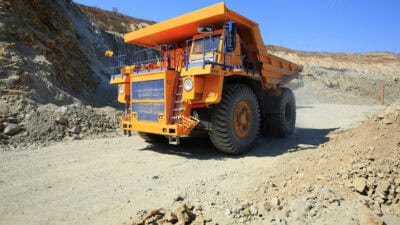



ASX mining shares have had a spectacular run due to rapidly rising commodity prices in CY25 and CY26.
In FY26, the ASX 200 materials sector, which is dominated by the miners, shot the lights out for investors.
The S&P/ASX 200 Materials Index (ASX: XMJ) soared 47% and produced total returns, including dividends, of 52%.
That compares to a 3% rise and total returns of 7% for the benchmark S&P/ASX 200 Index (ASX: XJO).
A staggering outperformance of 7:1.
The S&P/ASX 300 Metals & Mining Index (ASX: XMM), which includes an extra 100 mineral explorers, did even better.
ASX 300 mining shares rose 53%, and delivered total returns of 59% in FY26.
These explosive returns followed staggering increases in many commodity prices.

Image source: Getty Images
Commodity price surge
In FY26, the best price growth among commodities relevant to Australian mining was lithium spodumene, soaring 278%.
Lithium is a key component in rechargeable batteries for electric vehicles (EVs), e-bikes, smartphones, and energy storage systems.
In CY25, silver experienced the best price growth, up 147%.
Silver is an industrial metal used in solar panels, EVs, tech devices, and data centres due to its superior conductivity to copper.
The long-term tailwinds of decarbonisation and the artificial intelligence (AI) build-out contributed to mining's outperformance in FY26.
The ongoing structural change in central banks purchasing gold to diversify their reserves away from US treasuries also played a role.
Experts say we're in a new mining boom that will be different to the 2000s because it will be led by critical minerals, not iron ore.
While these long-term tailwinds will remain for decades, that doesn't automatically translate to vertical commodity price growth.
This is made clear in the 5-year outlook for commodities just published by the Federal Department of Industry, Science, and Resources.
Commodity price predictions FY27
For the period FY26 to FY31, the government reckons FY27 is going to be the strongest year for many commodity prices.
According to the resources department's latest Resources and Energy Quarterly:
Commodity prices are expected to peak in 2026–27 and then drift lower.
This is important information for ASX investors because commodity prices directly impact miners' earnings, and thus, their share prices.
The report also looks at energy commodity prices.
In CY26, Brent crude oil, gas, and coal prices have surged due to the US-Iran conflict and Middle East supply disruptions.
This contributed to energy ranking second (behind materials) among the 11 ASX 200 market sectors for total returns in FY26.
The S&P/ASX 200 Energy Index (ASX: XEJ) increased 9.37% and produced total returns of 14.51%.
The energy sector has the same forecasted commodity price trend.
For the period FY26 to FY31, the government expects four out of five energy commodity prices to peak in FY27.
This will have a direct impact on ASX energy shares.
Let's take a look at the forecasts.