As investors look to gain portfolio exposure to the AI buildout, there are several ASX ETFs on the market to consider.
While past performance doesn't guarantee future gains, it can be helpful to look at projections when comparing options.
Three of the most notable AI ASX ETFs include:
- Global X Semiconductor ETF (ASX: SEMI)
- Global X Ai Infrastructure ETF (ASX: AINF)
- Global X Artificial Intelligence ETF (ASX: GXAI).
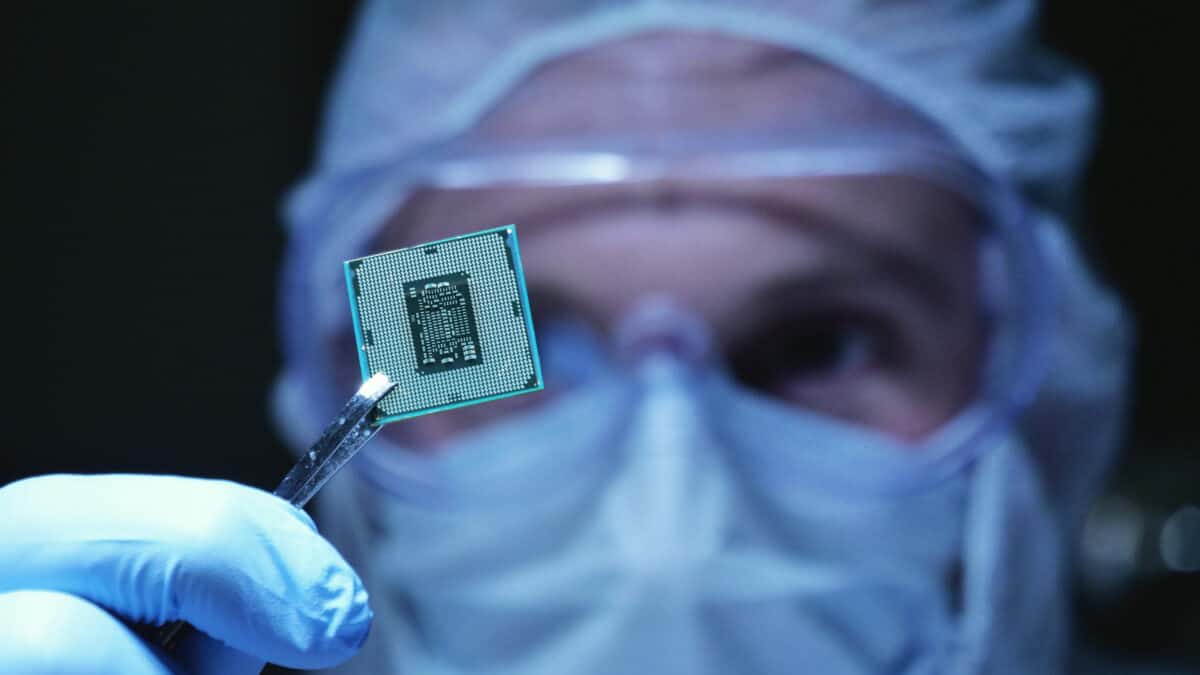
Image source: Getty Images
How are these funds different?
While all of these funds offer AI exposure, they are built in different ways.
Firstly, Global X Semiconductor fund focuses on the semiconductor industry.
These are the chips and hardware that power AI systems, including companies involved in chip design, manufacturing and equipment.
Secondly, the Global X AI Infrastructure ETF takes a broader "picks-and-shovels" approach to AI, investing in companies that provide the infrastructure needed to develop and run AI. This includes data centres, networking, power and semiconductors.
Finally, the Global X Artificial Intelligence ETF is the most directly focused on AI applications and technology, investing in companies developing or benefiting from AI software, automation, machine learning and related technologies.
In simple terms, SEMI is primarily about the chips, AINF is about the infrastructure that enables AI, and GXAI is about the broader AI ecosystem and its applications.
Which fund has performed the best?
The SEMI fund was first listed back in 2021, with GXAI listing in 2024 and AINF most recently in April 2025.
Since April 2025 when all funds were available:
- AINF is up 67%
- GXAI is up 43%
- SEMI is up 140%.
Looking at the last 12 months:
- SEMI is up 98%
- AINF is up 34%
- GXAI is up 22%
How much could $10,000 be worth in 12 months' time?
Taking these results over the last year and projecting the same returns for the next 12 months, a $10,000 investment could be extremely profitable.
Using the 12-month returns you provided and assuming, purely as a mathematical projection, that each fund repeats the same return over the next year:
- SEMI: A 98% return would turn $10,000 into $19,800 – a $9,800 gain.
- AINF: A 34% return would turn $10,000 into $13,400 – $3,400 gain.
- GXAI: A 22% return would turn $10,000 into $12,200 – a $2,200 gain.
So, if those past 12-month returns were repeated exactly, SEMI would produce the largest projected result at $19,800, followed by AINF at $13,400 and GXAI at $12,200.
However, these are hypothetical projections rather than forecasts, and past performance does not reliably indicate future returns.