Global X Semiconductor ETF (ASX: SEMI) shares are down 0.03% to $37.18 per unit on Friday.
SEMI was one of the best performing exchange-traded funds (ETFs) on the market in FY26.
The ETF produced an astounding one-year total return of 161%.
The 12-month trailing distribution yield was an impressive 6.2%.
This ASX ETF's performance is directly linked to the massive artificial intelligence (AI) investment thematic.
The AI revolution is only in its infancy, and the biggest thing happening right now is the building of its infrastructure.
Semiconductor companies are a direct way of investing in the AI infrastructure build-out.
Semiconductors are materials used to control electrical currents in computer chips.
They are essential components of the AI hardware designed by companies such as Nvidia.
Strong company earnings and high buying demand from investors pushed SEMI ETF higher over the course of FY26.
In an article, Global X said:
This year, share markets in the United States, Japan, South Korea and Taiwan have delivered strong gains as investors pour money into companies building the technology that powers AI.
Computer chip manufacturers, data centre operators and technology firms have become some of the world's most valuable businesses as demand for AI continues to surge.
SEMI ETF reached a record unit price of $47.78 on 23 June.
Then the world came crashing down.
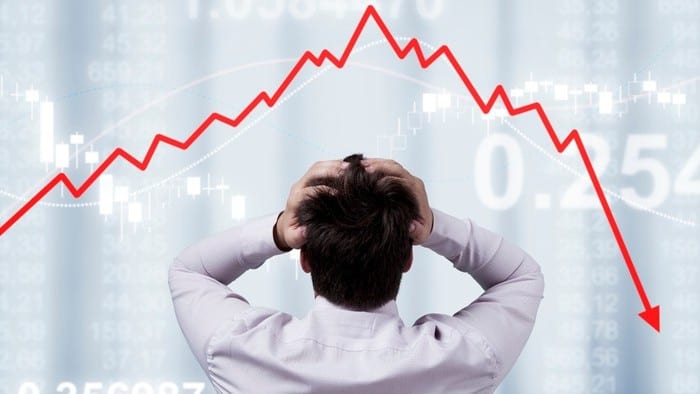
Image source: Getty Images
What happened to SEMI ETF?
A global sell-down of semiconductor companies began in South Korea on 23 June, and spread to the US the next day.
At first, SEMI ETF demonstrated resilience.
The ETF even rose another 3.6% over the next week before reaching a crunch point on 2 July, and crashing 12% in one day.
SEMI ETF has lost 21% of its value since 2 July.
That's a softer landing than South Korean chip makers SK Hynix and Samsung Electronics experienced in the sell-off.
SK Hynix shares are down 43% since 23 June. Their peak to trough drop was 48%, but they've recovered a little.
Samsung Electronics shares were down 33% at the end of July. They're now down 13% following a more rapid recovery than SK Hynix.
SK Hynix and Samsung Electronics represent about half the market cap of the Korea Composite Stock Price Index (KOSPI).
That's partly why their sell-off caused the entire KOSPI to crash.
You read the full story of the KOSPI crash here.
What now?
The share prices of semiconductor companies have rebounded following the global sell-off last month.
Angel Zhong is a finance professor at RMIT University who specialises in global financial markets, behaviour, and trends.
Zhong said the sell-off reflected an exciting technology narrative that had created market enthusiasm, then fear, in quick succession.
Zhong said:
AI will continue to transform industries, but markets often move through cycles of exuberance and reassessment.
Investors should be careful not to mistake a correction in market sentiment for a failure of underlying technology.
In other words, the AI build-out continues, and semiconductor stocks and ETFs are back on the rise.
More about SEMI ETF
SEMI invests in tech device manufacturers and AI-related companies including semiconductor developers and manufacturers.
SEMI ETF's top four holdings are Nvidia (11.3%), which designs graphics processors and AI chips, Broadcom (11%), a semiconductor designer, Taiwan Semiconductor Manufacturing Company (10.1%), the world's leading contract manufacturer of semiconductor chips, and Micron Technology (9.9%), which designs and manufactures memory and storage chips.
SK Hynix features in SEMI ETF's portfolio as the seventh largest holding at 6%.
Samsung Electronics is also in the mix but commands only 0.5% of SEMI's total net assets.
SEMI ETF has a management fee of 0.45%.