Own the VanEck Wide Moat ETF? Here's what you're really buying

There are some familiar names in this ETF's portfolio…

| More on:

You’re reading a free article with opinions that may differ from The Motley Fool’s Premium Investing Services. Become a Motley Fool member today to get instant access to our top analyst recommendations, in-depth research, investing resources, and more. Learn More

With almost $900 million in funds under management, the VanEck Morningstar Wide Moat ETF (ASX: MOAT) is a popular exchange-traded fund (ETF) on the ASX.

Although not quite in the same league as the index fund heavy-hitters like the Vanguard Australian Shares Index ETF (ASX: VAS), many Australian investors have entrusted the MOAT ETF with their hard-earned cash.

Most index funds are incredibly simple, and easy to wrap one's head around. VAS, for example, holds the largest 300 shares on the ASX, weighted by market capitalisation. Nothing more, nothing less.

MOAT is another kettle of fish, though, and works a little differently from a basic index fund. So today, let's dive deeper into the VanEck Wide Moat ETF, see how it works, and discuss what an investor will actually own if they buy this ASX ETF.

Unlike a simple index fund, MOAT uses a complex approach to build an underlying portfolio of investments that the ETF indirectly allows investors to purchase. Its portfolio is determined by a series of formulas. These seek to identify US stocks that show clear signs of possessing a wide economic moat.

This term, originally coined by legendary investor Warren Buffett, refers to a durable competitive advantage that a company can possess. It is used to keep customers within the company's 'walls', as well as keeping competitors out.
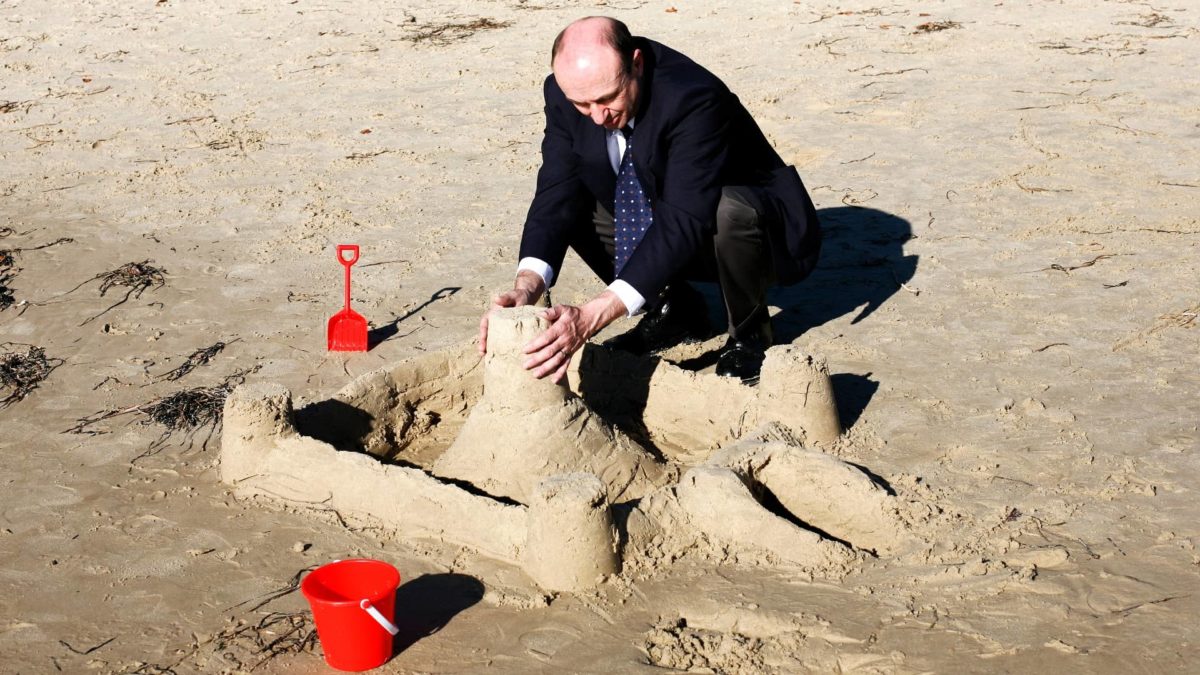
Businessman at the beach building a wall around his sandcastle, signifying protecting his business.

Image source: Getty Images

What's in the VanEck Wide Moat ETF?

This competitive advantage could be a strong brand, a low-cost advantage, or providing a good or service that customers find difficult to replace or avoid using.

The VanEck Wide Moat ETF identifies a series of companies that show signs of possessing at least one of these moats, and adds said company to its portfolio if the price is attractive. As such, MOAT tends to have a portfolio of around 50 individual stocks, all held at an equal weighting.

Here are the fund's current ten largest stocks, as of 15 May:

  1. Fortinet Inc
  2. NXP Semiconductors N.V.
  3. NVIDIA Corporation
  4. Mondelez International Inc
  5. Airbnb Inc
  6. Masco Corp
  7. Bristol-Myers Squibb Co
  8. Kenvue Inc
  9. Constellation Brands
  10. Microsoft Corporation

As you can see, there are clearly some wide moats there. It could be Microsoft's sticky Office or Windows software suites, Nvidia's dominance in AI and chip technology, Airbnb's network effects, or the power of Mondelez and Constellation's popular brands (which include Cadbury chocolate and Corona beer, respectively).

Some other names that you may recognise in MOAT's current portfolio include Amazon, Nike, PepsiCo, and Walt Disney Company.

The VanEck Morningstar Wide Moat ETF charges a management fee of 0.49% per annum.
Motley Fool contributor Sebastian Bowen has positions in Amazon, Microsoft, Mondelez International, PepsiCo, VanEck Morningstar Wide Moat ETF, Vanguard Australian Shares Index ETF, and Walt Disney. The Motley Fool Australia's parent company Motley Fool Holdings Inc. has positions in and has recommended Airbnb, Amazon, Bristol Myers Squibb, Fortinet, Kenvue, Microsoft, NXP Semiconductors, Nike, Nvidia, and Walt Disney. The Motley Fool Australia's parent company Motley Fool Holdings Inc. has recommended Constellation Brands and Masco. The Motley Fool Australia has recommended Airbnb, Amazon, Microsoft, Nike, Nvidia, VanEck Morningstar Wide Moat ETF, and Walt Disney. The Motley Fool has a disclosure policy. This article contains general investment advice only (under AFSL 400691). Authorised by Scott Phillips.

More on ETFs

Man looking at an ETF diagram.
ETFs

Expert names 1 ASX ETF to buy and 1 to hold

Which ASX ETF is the buy? Let's find out.

Read more »

Young woman reviewing financial reports at desk with multiple computer screens.
ETFs

3 Vanguard ETFs for Australian investors to build wealth by 2036

For investors looking toward 2036, I would focus on diversification, regular investing, and letting compounding do more of the work.

Read more »

Miner standing in front of trucks and smiling, symbolising a rising share price.
ETFs

These commodity ASX ETFs are leaving the market behind

These ETFs have exploded up to 135% in the past year.

Read more »

ETF spelt out with a piggybank.
ETFs

Three unique ASX ETFs to target the ASX 200 

These strategies could help reduce concentration risk.

Read more »

A bland looking man in a brown suit opens his jacket to reveal a red and gold superhero dollar symbol on his chest.
ETFs

3 excellent ASX ETFs to buy and hold for 10 years

Here are three funds that could help Aussie investors build wealth over the next decade.

Read more »

A panel of four judges hold up cards all showing the perfect score of ten out of ten
ETFs

Is this one of the best Vanguard ETFs to buy now?

Instead of trying to pick one tech winner, this fund gives investors access to a basket of global leaders across…

Read more »

A mother and her young son are lying on the floor of their lounge sharing a tech device.
ETFs

Why this BetaShares ETF could be a strong buy for Aussie investors

Instead of trying to pick one ASX tech winner, this fund spreads exposure across a basket of local growth shares.

Read more »

A smiling woman sits in a cafe reading a story on her phone about Rio Tinto and drinking a coffee with a laptop open in front of her.
ETFs

How to start investing with ASX ETFs in 2026

Let's see why these funds could be great options for beginner investors.

Read more »