ASX gold stock Ramelius Resources Ltd (ASX: RMS) is edging lower on Wednesday, down around 2% in early afternoon trade. The share price fell despite the company unveiling promising new exploration results.
Over the past 12 months, the $7 billion stock has been a strong performer. It has climbed around 30%, beating the S&P/ASX 200 Index (ASX: XJO), which has gained roughly 14%. But momentum has cooled in 2026, with the stock now down around 12% year to date.
So, what's behind today's dip?
Image source: Getty Images
Strong discoveries at Dalgaranga
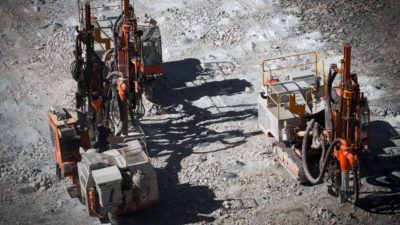
The ASX gold stock released an exploration update from its Dalgaranga project, highlighting high-grade gold hits that could support future underground mining at the Gilbey's deposit.
Standout drill results included 3.9 metres at 21.2g/t gold and 6.1 metres at 10.4g/t gold — impressive grades that point to a potentially valuable underground resource.
Total mineral resources at Gilbey's Underground now sit at 6.9 million tonnes at 1.9g/t for around 380,000 ounces of gold.
Drilling across areas like West Winds and Four Pillars is helping validate earlier estimates and is pushing Ramelius to consider Gilbey's as its next underground mine at Dalgaranga. Importantly, these higher-grade zones could replace lower-grade ore currently planned for processing in FY29 and FY30.
That could potentially boost margins and supporting long-term production targets.
More growth potential emerging
Beyond Gilbey's, the ASX gold stock is actively drilling across the Plymouth-Sly Fox region, aiming to add both underground and open-pit opportunities to its pipeline.
Early results are pointing to further resource growth, with additional assays still pending. Exploration is also underway at nearby Golden Wings and Gilbey's South, with more updates expected in coming months.
Ramelius plans to ramp up drilling at Gilbey's Underground from late April 2026, targeting resource upgrades and extensions to known high-grade zones. Similar work is planned at Sly Fox and Plymouth to support future mine planning.
All of this feeds into a bigger ambition: lifting group gold production beyond 525,000 ounces per year by FY30 through a mix of resource conversion and new discoveries.
So why are shares falling?
Despite the positive operational update, external factors appear to be driving today's weakness.
Gold prices slipped overnight, with futures down around 0.95% to US$4,695.7 an ounce. Concerns around inflation and the potential for further interest rate hikes — partly linked to rising oil prices — weighed on the precious metal.
For ASX gold stocks like Ramelius, short-term share price moves are often closely tied to the gold price itself. So even strong exploration results can be overshadowed if the commodity price is moving in the opposite direction.
Foolish takeaway
Ramelius has delivered encouraging exploration news, pointing to higher-grade resources and future production upside. But in the short term, macro factors — particularly gold price movements — can have the final say on share price direction.
For investors, that means separating the long-term story from the day-to-day noise.