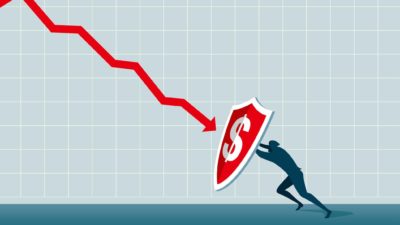
Inflation is when an economy's price of goods and services increases over time. It is measured as the rate of change in a period.
According to a new report from Betashares, after years of low inflation, the environment investors have become accustomed to is starting to shift.
Hans Lee, Senior Finance Writer at Betashares, said for most of the past two decades, inflation was low enough that many investors didn't need to think about it. But that backdrop may now be shifting.
Treasury modelling flagged this month that the Iran conflict could push inflation to 5% or above. Both the RBA and the Federal Reserve have revised their inflation forecasts higher this year, with the RBA now expecting inflation to remain above its 2-3% target until early 2027.

Image source: Getty Images
How is inflation measured?
One way we measure this metric is using the The Consumer Price Index (CPI).
It measures household inflation and includes statistics about price change for categories of household expenditure.
The most recent data shows CPI annual inflation was 3.7% in the 12 months to February 2026.
This is above the Reserve Bank of Australia's goal range of between 2-3%.
How does it impact investors
Inflation can eat away at returns more than many investors realise.
For example, if your portfolio gains 6% but inflation runs at 4%, your real return is only about 2%. Investors must beat inflation just to preserve wealth.
According to Betashares, this is also extremely relevant for investors approaching retirement.
A higher assumed rate of inflation may also move the goalposts on your FIRE number retirement target. That nominal $1 million figure would now be $1 million plus the rate of inflation meaning the number you need to reach keeps rising, which means the return your portfolio needs to deliver rises with it.
Where to invest in a high inflation environment
According to the report from Betashares, for investors looking to add inflation resilience to an existing portfolio, there are particular assets that may help.
Firstly, there is historical evidence that gold has been able to preserve most of its purchasing power through inflationary periods when paper assets have struggled.
Gold focussed ASX ETFs include:
Another asset class to consider according to Betashares is royalty companies.
These are businesses that own royalty streams on commodities or other assets, collecting a percentage of revenue rather than bearing production costs.
That structure may be less exposed to rising input costs, although performance will depend on commodity prices and other factors.
For exposure to royalty companies, investors may consider Betashares Global Royalties ETF (ASX: ROYL).
Finally, listed infrastructure often have revenues that are linked (to varying degrees) to inflation through regulated pricing or contractual arrangements.
However, the extent of this linkage and its impact on income may vary.
An ASX ETF that provides exposure to this sector is FTSE Global Infrastructure Shares Currency Hedged ETF (ASX: TOLL).