When people think about investing in miners, they often assume returns will be unpredictable.
And to be fair, that's partly true. Commodity prices can move around a lot depending on the global economy, supply and demand, and geopolitical events. That means mining shares rarely deliver smooth returns year after year.
However, over longer periods of time, the best mining companies have still managed to deliver attractive total returns for investors.
With that in mind, what could a $10,000 investment in BHP Group Ltd (ASX: BHP) shares look like over the next decade?

Image source: Getty Images
A diversified mining powerhouse
BHP is one of the largest and most diversified miners in the world.
Its operations span multiple commodities and regions, which helps balance out the inevitable ups and downs of individual commodity cycles. Over time, that diversification has helped the company generate strong cash flow and return large amounts of capital to shareholders.
Iron ore has historically been its biggest contributor, but the mix is gradually evolving.
Copper could drive the next phase of growth
One of the reasons I believe BHP could continue delivering solid returns over the coming decade is its exposure to copper.
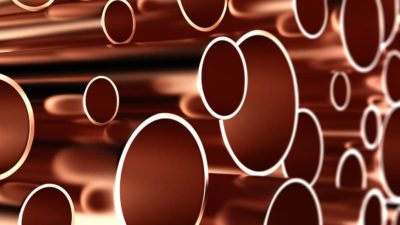
Copper demand is expected to increase significantly as the global economy electrifies. Electric vehicles, renewable energy systems, and expanding electricity grids all require large amounts of copper.
Because of this, many analysts expect the copper market to tighten over time as demand grows faster than new supply.
BHP has positioned itself well to benefit from this trend through its major copper operations, including the world-class Escondida mine in Chile. As copper demand grows, these assets could play an increasingly important role in the company's earnings.
A new growth engine in potash
Another long-term opportunity comes from BHP's Jansen potash project.
Located in Saskatchewan, Canada, production at Jansen is expected to begin in mid-2027. Once fully ramped up, the operation is expected to produce around 8.5 million tonnes of potash per year.
Potash is a key fertiliser ingredient used to improve crop yields. BHP believes demand for potash could increase substantially over the coming decades as the global population grows and agricultural land becomes more nutrient depleted.
If that thesis proves correct, Jansen could become a major new earnings contributor for the company over time.
A realistic long-term return assumption
Historically, the Australian share market has delivered total returns of roughly 9% per year over long periods.
If BHP shares were able to achieve something similar over the next decade, that return would likely come from a combination of share price growth and dividends.
However, it is very unlikely to happen in a straight line. Mining shares tend to move in cycles, meaning some years could be strong while others could be weaker.
But if we assume an average annual return of 9%, including dividends reinvested, the long-term result can become quite interesting.
So what could $10,000 become?
If $10,000 were invested in BHP shares and the investment compounded at an average total return of 9% per year, after 10 years it could grow to roughly $24,000.
That figure includes both capital growth and reinvested dividends.
Of course, there are no guarantees that BHP shares will deliver that return. Commodity prices, global economic conditions, and company performance will all play a role.
But given BHP's scale, its growing exposure to copper, and the long-term potential of projects like Jansen, I think a return in that ballpark is certainly within the realm of possibility over the next decade.