If you started 2026 hoping to buy silver, or even buy more of the precious metal, you probably wouldn't be alone. As we discussed last week, the rise of silver has been one of the most shocking events on global financial markets in recent months.
Silver has risen from under US$31 an ounce in early 2025 to the latest record high of over US$117 for that same ounce that we've seen in just the past 24 hours. Yep, silver looks like it is on the verge of a quadrupling in value in just the past 12 months. This extraordinary run means that silver has outpaced gold, platinum, Bitcoin (CRYPTO: BTC) and almost every major stock market index in the world over the past year. Many silver shares have done even better.
As such, many investors out there might be thinking that silver might just be the hottest trade in 2026.
One can certainly see the appeal. Apart from the temptation to just hop on a bandwagon that has been so lucrative for investors, silver is a precious metal with many of the same attractions as gold. It has a finite supply, a history of underpinning and being used as money, and as a hedge against inflation, geopolitical uncertainty and financial instability more broadly.
Silver's narrow supply, thanks to its nature as a byproduct of mining other commodities, also makes the metal vulnerable to sharp price movements. As we discussed regarding gold this morning, putting all of these factors together, one might conclude that there is still time to buy silver in early 2026.

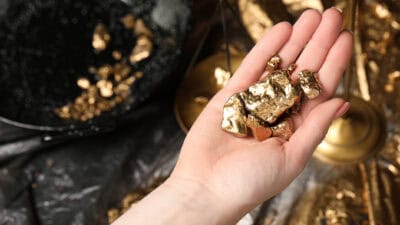
Image source: Getty Images
Buying silver in 2026?
However, I don't think the thesis for silver remaining a buy today is as strong as the one I posited for gold this morning. Any investor who is indeed considering buying silver bullion or a silver exchange-traded fund (ETF) today needs to keep one very important factor in mind.
One of the aspects that makes gold such a unique investment is its use profile. The vast majority of annual gold production goes towards one of two uses. The first is investment-grade bullion. The second, jewellery. In fact, industrial uses of gold only account for about 10% of global demand for the precious metal. This makes gold demand uniquely uncorrelated to the health of the economy amongst commodities. This is partly why gold is viewed as an effective safe-haven asset.
Silver does not share this characteristic, however. The white metal has a myriad of industrial uses. After all, silver is one of the best conductors of electricity on the periodic table, even better than copper. That makes it an essential ingredient of everything from circuit boards and solar panels to electric vehicles and data centres.
Right now, demand for these goods is soaring, which partially explains silver's record run. However, if there were a recession tomorrow, its highly likely we would see a sharp reduction in the demand for industrial silver. This could lead to a sharp correction in the price of silver itself. Gold, which would not experience such a drop-off, would arguably be the better 'safe haven' asset to hold in such a scenario
Foolish takeaway
No one, particularly this writer, knows what will happen in 2026 when it comes to the global economy or the prices of gold or silver. But investors should keep in mind that gold and silver are two different asset classes, whose supply and demand curves are influenced by inconsistent factors. You don't want to find out that you haven't invested in a safe-haven asset the hard way.