Image source: Getty Images
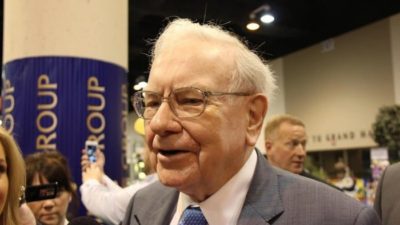
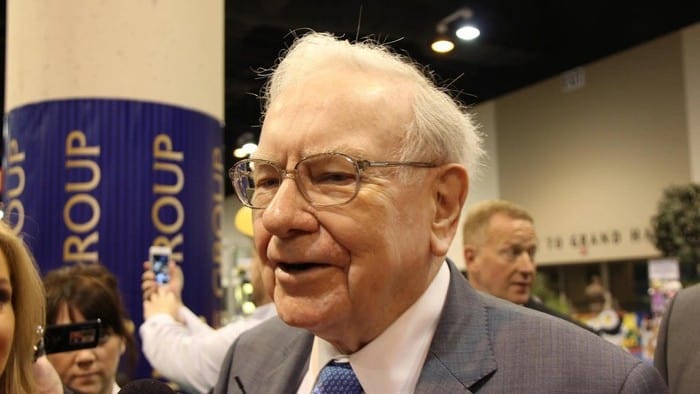
It's been a busy and varied week – I wrote to you in this space on Monday about housing and Super, and yesterday I penned a short reflection on Remembrance Day – but I'm returning to regular programming with a one-day delayed (Remembrance Day was more important) perspective on Warren Buffett's latest missive, released on Tuesday morning, our time, which is being referred to in much of the media as his 'last' letter.
Now, the bloke is 95. He's not buying green bananas any more, and it's entirely possible that Father Time (the analogy he uses in his letter) catches up with him before he has another chance to share his thoughts with his readers.
(Buffett is, if you haven't yet learned about him, the greatest investor of our time, and perhaps ever. He is also, until December 31, the CEO of investment conglomerate Berkshire Hathaway Inc (NYSE: BRK.A) (NYSE: BRK.B) (in which I own shares). And, according to Bloomberg, he's the 10th richest person in the world, worth a cool US$148b ($228b). That's a lot to fit on a business card!)
Whether it's his last letter will depend on whether he makes another trip around the sun. It's true that after he passes the torch to new CEO Greg Abel on January 1, he'll stop writing his annual shareholder letter. But Buffett will remain Chairman for as long as he is able, and intends to write his 'Thanksgiving letter' – Tuesday's missive was just that – hereafter.
So it's his last as the company's CEO, but – the good lord willing and the creeks don't rise – not necessarily his last, overall.
Regardless, when Warren Buffett speaks, or writes, we'd be mad not to listen and read – and madder still not to consider whether we can learn something from the man known as The Oracle of Omaha.
So what should investors take from his letter?
It was a mixed bag, covering Buffett's future, the future of his estate (it'll go to his kids' foundations to be used for charitable work), the role of luck and good fortune, another dig at executive compensation, and sprinkled with his usual optimistic view that, while share prices can be volatile, the future is bright.
It also interestingly, and perhaps not surprisingly, given Buffett's age and current transition, struck a somewhat wistful note; Buffett talked about his faith in his kids, that he was glad they got some wonderful attributes from their mother, and added:
"I write this as one who has been thoughtless countless times and made many mistakes but also became very lucky in learning from some wonderful friends how to behave better (still a long way from perfect, however)."
There is, then, a lot of ground from which to take lessons, and which covers many topics.
I would encourage you to read the letter: it's short, and worth your time. And while I could try to do a blow-by-blow '6 things we learned…' article, it'd end up almost as long as the original, and without Buffett's style or continuity.
So, then, instead let me whet your appetite with a lightly edited selection of some of my favourite lines, in the hope it'll inspire you to read the original.
On having a mid-Western approach to life:
"Looking back I feel that both Berkshire and I did better because of our base in Omaha than if I had resided anywhere else. The center of the United States was a very good place to be born, to raise a family, and to build a business. Through dumb luck, I drew a ridiculously long straw at birth."
On the role of luck in business and in life:
"[…] Lady Luck is fickle and – no other term fits – wildly unfair. In many cases, our leaders and the rich have received far more than their share of luck – which, too often, the recipients prefer not to acknowledge. Dynastic inheritors have achieved lifetime financial independence the moment they emerged from the womb, while others have arrived, facing a hell-hole during their early life or, worse, disabling physical or mental infirmities that rob them of what I have taken for granted. In many heavily-populated parts of the world, I would likely have had a miserable life and my sisters would have had one even worse.
On genes and becoming a better role model:
"Fortunately, all three [of Buffett's] children received a dominant dosage of their genes from their mother. As the decades have passed, I have also become a better model for their thinking and behavior. I will never, however, achieve parity with their mother."
On Buffett's replacement:
"[Incoming CEO] Greg Abel has more than met the high expectations I had for him when I first thought he should be Berkshire's next CEO. He understands many of our businesses and personnel far better than I now do, and he is a very fast learner about matters many CEOs don't even consider. I can't think of a CEO, a management consultant, an academic, a member of government – you name it – that I would select over Greg to handle your savings and mine."
On executive remuneration:
"Based on the majority of my observations – the CEO of company "A" looked at his competitor at company "B" and subtly conveyed to his board that he should be worth more. Of course, he also boosted the pay of directors and was careful who he placed on the compensation committee. The new rules produced envy, not moderation. The ratcheting took on a life of its own. What often bothers very wealthy CEOs – they are human, after all – is that other CEOs are getting even richer. Envy and greed walk hand in hand. And what consultant ever recommended a serious cut in CEO compensation or board payments?"
On Berkshire's structure and strength:
"Berkshire has less chance of a devastating disaster than any business I know. And, Berkshire has a more shareholder-conscious management and board than almost any company with which I am familiar (and I've seen a lot). Finally, Berkshire will always be managed in a manner that will make its existence an asset to the United States and eschew activities that would lead it to become a supplicant."
Perhaps befitting both a 'Thanksgiving' letter, and one in which Buffett is handing off executive control of the company (and maybe from a 95 year old who's done and seen a lot), Buffett's life advice took the final section of the letter, and is worth reprinting, almost in full:
"One perhaps self-serving observation. I'm happy to say I feel better about the second half of my life than the first. My advice: Don't beat yourself up over past mistakes – learn at least a little from them and move on."
"It is never too late to improve. Get the right heroes and copy them."
"Decide what you would like your obituary to say and live the life to deserve it."
"Greatness does not come about through accumulating great amounts of money, great amounts of publicity or great power in government. When you help someone in any of thousands of ways, you help the world. Kindness is costless but also priceless. Whether you are religious or not, it's hard to beat The Golden Rule as a guide to behavior."
"I write this as one who has been thoughtless countless times and made many mistakes but also became very lucky in learning from some wonderful friends how to behave better (still a long way from perfect, however). Keep in mind that the cleaning lady is as much a human being as the Chairman."
And he concludes:
"Choose your heroes very carefully and then emulate them. You will never be perfect, but you can always be better."
I was going to finish with some remarks of my own. But I'll let Buffett's words speak for themselves.
It will be a sad day when we no longer have the Oracle of Omaha around.
Fool on!