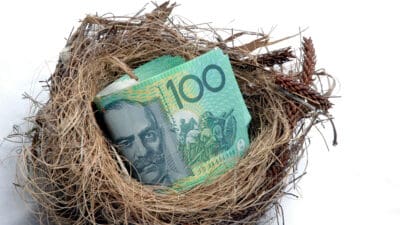
Putting money into superannuation is widely seen as one of the best things Australians can do for their long-term wealth. But, it's not as clear cut what the right type of investments in superannuation are.
There is a wide range of assets that people can choose to invest in, such as cash, bonds, property, infrastructure, Australian shares and global shares.
I think many assets can be boiled down to whether a majority/all of the asset's return comes from income or growth.
There isn't one answer that fits every investor's goals and preferences, but there are certainly some factors that investors should consider.
Accumulation phase
It's great how superannuation contributions are taxed at a lower rate than normal income for working Australians.
Investment earnings are also taxed at a lower rate in superannuation than in our personal names.
But, what makes the most sense to invest in as we build our nest egg towards retirement?
For plenty of Australians, reaching retirement age could be decades away. That gives us plenty of time to build up our asset base.
It's true that shares are one of the most volatile asset classes year to year. However, shares have also generated excellent wealth-growing returns over the ultra-long-term.
When someone has an investment horizon measured in decades, it's much easier to be patient and ride through those volatile share market times. If we're going to retire in 30 years from now, it doesn't really matter what happens with volatility in the next year or in 2027. What's going to deliver the biggest return over the decades?
In terms of growth shares or dividend shares in superannuation, I'd prefer to go for growth shares. Not only could those businesses grow their earnings at a faster pace thanks to the power of compounding, but it may also mean less of the return lost to tax along the journey.
Every time a dividend/other income is paid, it's taxed. However, growth shares aren't taxed when they go up in value. Capital growth is only taxed when the asset is sold.
Retirement phase
Australians entering superannuation may have a range of assets already, so an individual strategy and course of action may be appropriate to figure out with a financial planner.
ASX dividend shares can be particularly effective for Australians in retirement because of their ability to deliver a materially pleasing level of cash flow for investors thanks to the good dividend yield. Certain ASX dividend shares can provide investors with a pleasingly stable (and growing) payout.
Some retirees may not want to be exposed to the higher volatility of growth shares in retirement, even if they may be able to deliver stronger returns over the long-term. Don't forget, investors can sell a small portion of their shares each year to create cash flow, it doesn't have to come from dividends. I like strong-performing exchange-traded funds (ETFs) such as VanEck MSCI International Quality ETF (ASX: QUAL) for a strategy like that.
Remember, even in retirement, a retiree may need their assets to last for decades, so it's worthwhile being invested in (ASX) shares because of how they can deliver the strongest return over the decades and help wealth creation. That's why (ASX) shares can be such good investments at any stage of superannuation, in my view.