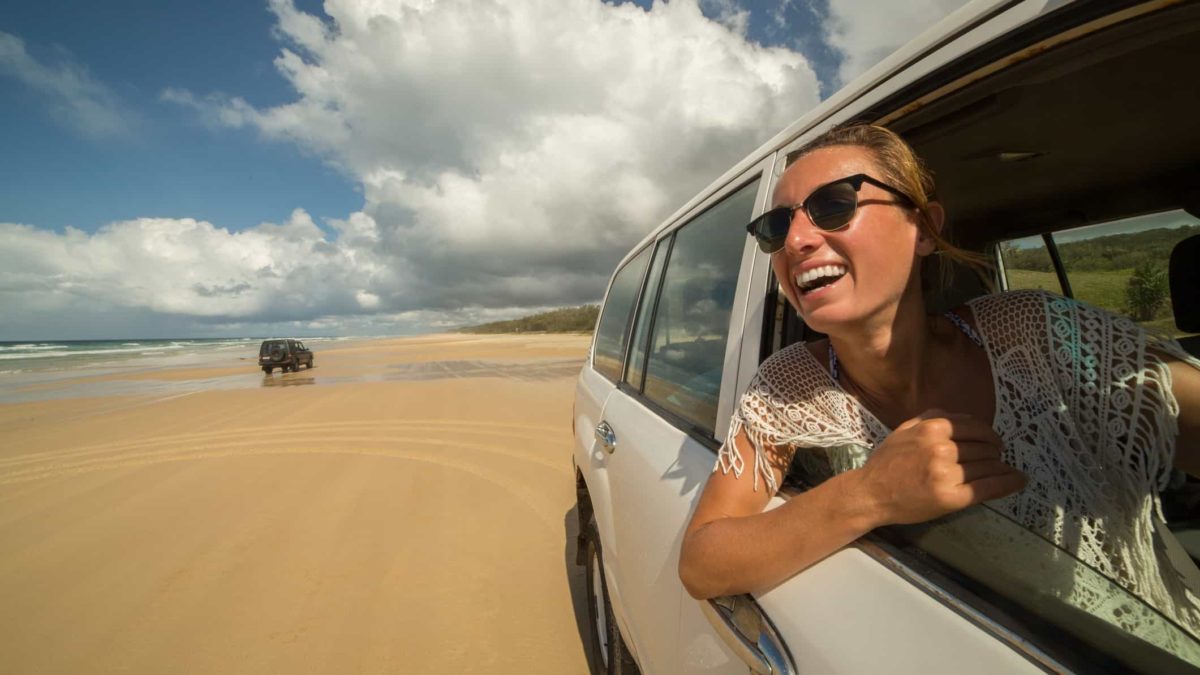
Image source: Getty Images
Regular readers will know that I'm coming to the end of an extended mid-year holiday – a road trip to Darwin and back.
Actually 'regular' might be overdoing it… I've been too busy with family and friends to sit down and type anything for about three weeks!
(I am on holidays, though, so I reckon that's a reasonable excuse!)
Anyway… other than being recognised a couple of times (including while swimming about 10 feet from the waterfall at Wangi Falls in Litchfield National Park!), and being kept informed by my team of the goings on of our recommendations, I haven't spent much time on official Motley Fool business while I've been away.
With a couple of exceptions.
First, the next Motley Fool Share Advisor Buy recommendation comes out on Thursday, and I've been discussing it with the team.
Second, well, my mind is never far from investing. (The abovementioned regular readers often remark, when I start my pieces with a story, 'I wonder how he'll tie that in with investing…').
Which is how I find myself sitting in the bar of the Hotel Corones in Charleville, Queensland, on a Tuesday afternoon typing this.
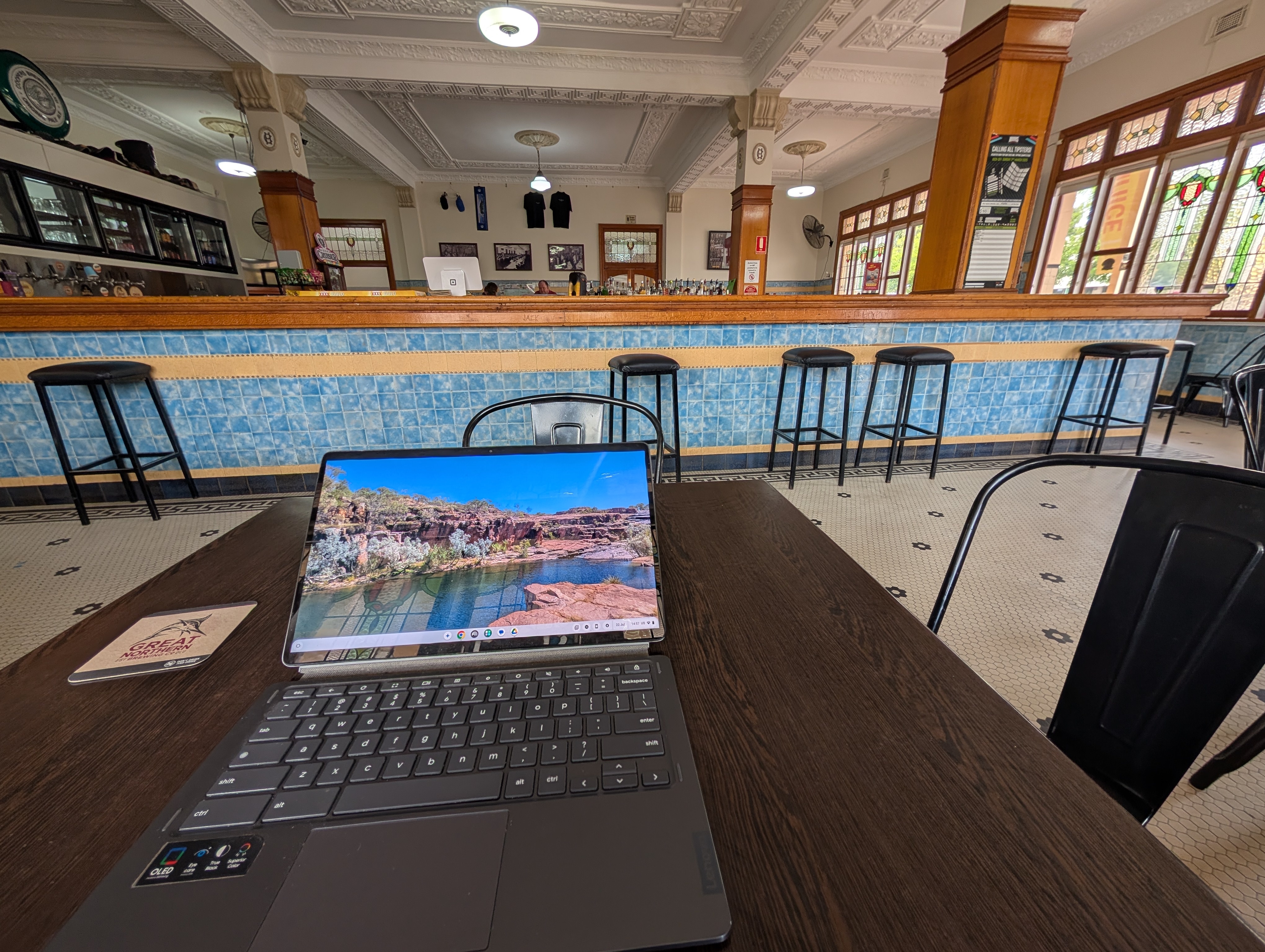
The trip has been in five rough parts: a week getting to Darwin, a week in Kakadu, a week in Arnhem Land, a week in Litchfield National Park, and a week getting home.
I'm halfway through the latter.
I was going to say 'unfortunately', because I love the Australian bush. But I'm also lucky to love my home and my job, so it's 'fortunately', as well.
Anyway, as I was driving into Charleville, I was thinking back to some of the many, many highlights of the trip. (As I've written before… please, please do yourself a favour and see more of Australia… we're bloody lucky to live here!)
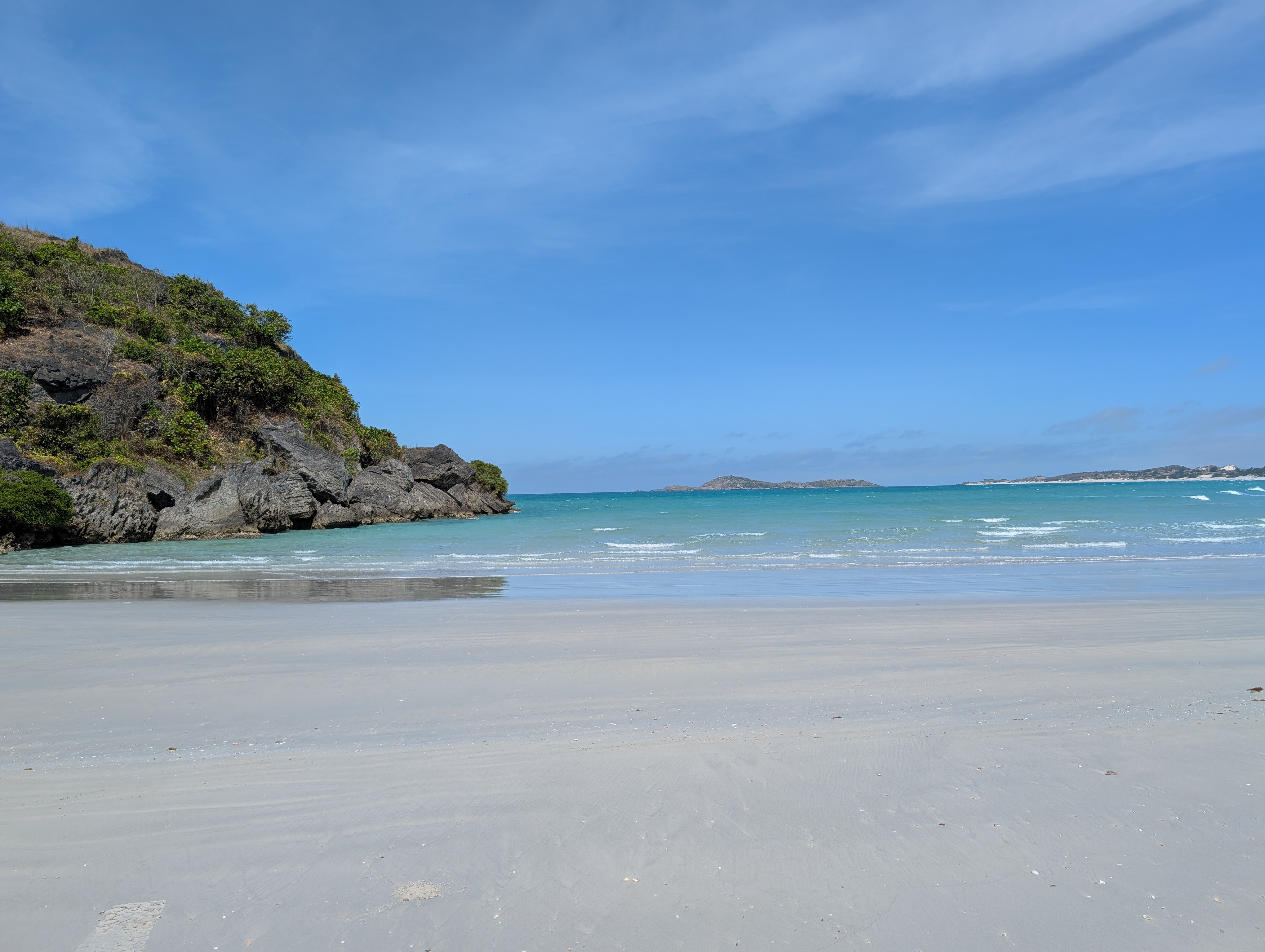
I was thinking of one particular day, up in Arnhem Land. We were driving out to a spectacular part of the coastline; a place called Cape Arnhem.
The drive out to the beach was enjoyable, and the views when we got there were spectacular. We had lunch, then decided to drive a little further along the beach itself (yes, we were allowed to be on the beach in the 4WD).
I figured the safest way to navigate the soft sand was to follow in the tracks of the vehicle in front. If they made it through, then there was a good chance we would, too. If they didn't… well, we'd learn from their mistakes.
Whether or not that was the best course of action, the former happened… until the latter struck.
Going around a particularly soft and off-camber section of beach, the Hilux in front of us went down.
We stopped, of course, glad it wasn't us. But then we waited.
The family jumped out of their car to survey the damage… and I had a hunch they'd struggle to get themselves out.
I was right.
Now, I'm not suggesting that they couldn't or wouldn't have eventually dug themselves out, but it was going to be a decent effort. They were high up the beach, in soft sand. There was no obvious or easy path out.
So, we did what any decent people would do, and offered to give them a hand.
It turned out that they were a really lovely Swiss family, who'd hired a 4WD for the trip. The vehicle was decently equipped, but it was their first time driving on sand, and they weren't experienced four-wheel drivers.
I should stress at this point that neither am I.
I've done a decent amount of sand driving, water crossings and dirt roads, but I am far from an expert.
My approach then, is best described as 'all the gear, and little-to-no idea' – a phrase I picked up when preparing for my Kokoda trek back in 2018.
The view I took, and take, is that if I can't rely on my skill alone, the second best approach is to make sure I have the appropriate equipment. It gives me the best chance of a good outcome. That, and making sure I was as educated as I could be, in using said gear.
So I was able to use the winch on the front of my 4WD, the UHF radio in the car, some recovery gear in the back, 4 'Maxtrax' recovery boards and the help of my mate who was spotting.
In truth, it wasn't a difficult recovery. It did take a bit of digging, and we took it slowly to avoid overheating the winch (including changing the recovery angle), but we got them out.
They were appreciative, we got a photo, and I hope it left them with a positive view of Australians.
Okay, so now the question: 'I wonder how he'll tie that in with investing…'.
As I was thinking about that experience this morning on the drive, it occurred to me that there were, indeed, some investing parallels.
The first is the usually-derisively-intended label 'all gear and no idea'. True, having all of the best gear can lead to overconfidence and can lead to trouble.
In that sense, it can apply to investors. Those who do a course, buy some software, open a brokerage account, and think they're instantly super-traders. Those people could do with a pinch (or a pound) of humility and some patience.
But it can be too binary. After all, how do you get an idea? And should you really have no gear until you do? Of course not.
In my case, I try to keep that humility front and centre. It wasn't my first time using a winch, or doing a recovery. But I've only done it a handful of times.
I've also watched and read a lot of four-wheel driving content. I've taken the time to understand the theory, and do some practice. I've learned from others, and I've learned from doing.
I also kept it simple.
We stopped. We thought. We evaluated. And we discussed.
We tried digging, first.
When that was no good, we went to Plan B.
We took it slow and steady.
We didn't try any heroics. We didn't rush. We were careful, and safe.
As I said, we kept it simple.
And I think that's the investing analogy.
Investing well isn't about black boxes. It's not about sophisticated 'trading strategies'. It's not about getting rich quick.
But nor is it doing nothing until you're a qualified black belt.
It is, I think, about understanding the basics – reading, listening, learning and thinking.
Then it's about the slow, deliberate, thoughtful application of those basics.
That's… kind of it.
No, that doesn't turn you into Warren Buffett.
And it doesn't mean you'll never make a mistake or have an investing regret.
But I think it maximises your chances of modest, ongoing, long-term success, overall.
We could have helped our new friends out of their situation more quickly, if we'd rushed.
We could have had even better, more expensive gear.
But then, we could have had no gear, either, on the basis that we weren't card-carrying experts yet.
Instead?
We took the middle road.
We'd learned what we could, in advance. We'd prepared ourselves and our equipment, just in case.
And then, taking it slow and steady, we put our best foot forward.
When the first effort faltered we stopped, re-evaluated, and tried again.
What does it mean for investors?
To learn in advance. To prepare appropriately.
What does it mean to be slow and steady, in investing?
Those questions could take a book – or a series of them – to answer in absolute totality.
But in a line or two, it's taking the time to understand what successful investing looks like, and how it's achieved.
It's having a realistic and achievable plan.
It's thinking probabalistically about what course of action is likely to deliver the best long term results (or, if you like, causing the least regret).
For me, that's the 'get rich slowly' approach.
Work diligently. Save religiously. Invest regularly. Diversity sensibly. Wait patiently.
Don't want to do that?
That's your choice. I mean, it might work out fine.
Or, like our Swiss friends, you could end up bogged to the axles, spinning your wheels as the tide comes in.
Choose carefully.
Fool on!