The markets are clearly rejoicing at the news of the US-China trade deal that was announced yesterday. At the time of writing, the S&P/ASX 200 Index (ASX: XJO) has gone backwards a little so far this session, currently down 0.11%. However, that's not enough to erase the 0.4% gain we saw yesterday after this news first broke.
Other markets have been far more euphoric. Over in the United States, the Dow Jones Industrial Average Index (DJX: .DJI) fell 0.64% overnight. But that came after the Dow's monster 2.81% jump that we saw on Monday night (our time).
The technology-dominated Nasdaq Composite Index (NASDAQ: .IXIC) has been even more bullish. Last night, the Nasdaq put on 1.61%, adding to the already impressive 4.35% leap we saw on Monday.
So it's clear that investors approve of the trade deal that the United States and China revealed earlier in the week. This will see the US tariff rate imposed on Chinese imports fall from 145% to just 30%. Likewise, China will slash the 125% tariff on American imports down to 10%.
Officially, these reductions are temporary, scheduled to last 90 days. Even so, the markets are obviously hopeful that trade relations between the world's two largest economies have turned a corner.
As such, we can already conclude that the US-China trade deal has impacted ASX share portfolios. After all, the ASX 200 is higher today than where it was on 1 April, even if we aren't back to February's peaks just yet.
But is this the end of the Trump 'Liberation Day' tariff saga? Or is it too soon to say that ASX share portfolios are out of the woods?
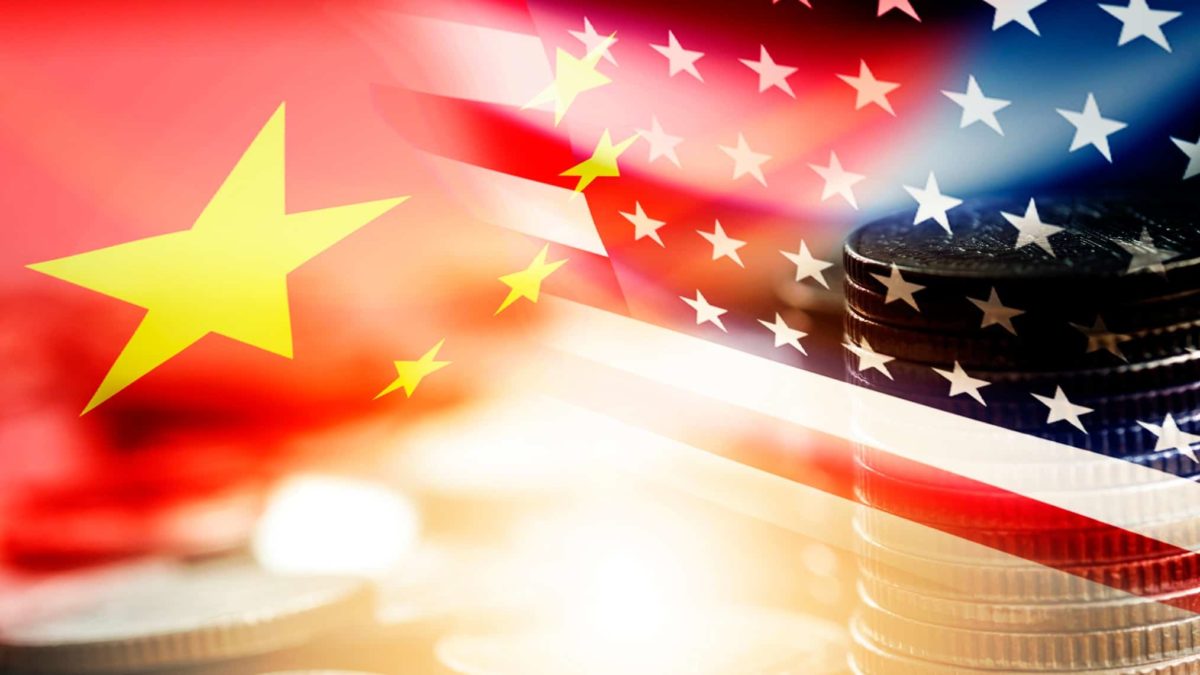
Image source: Getty Images
US-China trade deal: Is the worst over?
Given the Trump administration's trademark unpredictability, it is very difficult to make any predictions about the future of America's trade policy. As we noted above, the US-China trade deal is only a band-aid solution at this point. A more permanent one will have to be implemented in three months. If whatever replaces the current arrangement turns out to be harsher than the agreement revealed earlier this week, then all bets are off.
There is another factor at play here, though – the state of the global economy. It's fair to say that markets are assuming that economic relations will return to something akin to where they were prior to Trump's tariff changes. That's going off the current level of the US markets.
However, it is worth noting that the effects of the quasi-trade embargo that was in place for over a month have yet to be fully felt. It is well within the realms of possibility that the shutdown of trade between the US and China will have some carry-on effects in the coming weeks, which could possibly spark a slowdown in global growth and a spike in inflation.
Further, it is also worth keeping in mind that there are still significant tariffs in place around the US economy. Chinese imports still face a relatively steep (by historical standards at least) 30% tax rate upon entering the United States. Additionally, the US still maintains hefty tariffs on steel, aluminium, and other goods, as well as a baseline 10% tariff on almost all imports entering the country. Again, the full effects of these new tariffs have yet to flow through.
It may look like global markets are back to normal, but don't be surprised if this isn't the last we hear of Trump's tariffs.