This article was originally published on Fool.com. All figures quoted in US dollars unless otherwise stated.
The sudden and sharp stock market sell-off following the Trump administration's tariff announcements on April 2 is hitting the world's largest technology companies. Apple (NASDAQ: AAPL), Microsoft, Amazon, Alphabet (Google), Meta Platforms (Facebook), Nvidia, and Tesla -- a group known as the "Magnificent Seven" stocks -- have plunged from their highs.
Of these seven tech giants, Apple has suffered the sharpest decline thus far in response to the Trump tariffs.
Is the stock's decline warranted? How might tariffs impact Apple and its beloved iOS products? Most importantly, should investors buy the dip or wait this out?
Here's what you need to know.
Apple faces significant tariff risks
The Trump administration's announced tariff plan, barring changes, will have far-reaching effects on the world's economy and manufacturing landscape. President Donald Trump's plan applies a 10% unilateral tariff on U.S. imports, which began on April 5. Additionally, the government will, starting April 9, apply incremental "reciprocal tariffs" on imports from countries the administration deems to have mistreated the United States in trade.
America imports far more than it exports, so these plans signal a massive change to the country's existing trade policies and could increase prices for U.S. consumers.
If the announced reciprocal rates go into effect, they'll dramatically affect Apple, whose supply chain is almost entirely outside the United States; its manufacturing occurs in China, India, Japan, South Korea, Taiwan, and Vietnam. Here are the announced reciprocal tariff rates for those countries:
- China: 34%
- India: 26%
- Japan: 24%
- South Korea: 25%
- Taiwan: 32%
- Vietnam: 46%
Beyond that, Apple sources most of its hardware components from foreign countries as well. Due to tariffs, an iPhone could cost as much as 43% more. Apple will either have to eat some or all of those costs, or pass them on to U.S. consumers, likely hurting sales.
It doesn't help that Apple was already due for a drop
The tariffs are a clear downward catalyst for Apple stock, but they're not the only one. There is a strong argument that Apple has bungled its first crack at artificial intelligence (AI) thus far. It integrated AI features into Siri and iOS late last year, dubbing them Apple Intelligence. However, that hasn't ignited iPhone sales as hoped, and the lukewarm reception led the company to shuffle its internal AI leadership.
The situation doesn't exactly inspire confidence. Plus, Apple stock entered the year trading at a price-to-earnings (P/E) ratio of more than 40, although analysts had been steadily lowering their estimates of long-term earnings growth since early 2022:

AAPL PE Ratio data by YCharts.
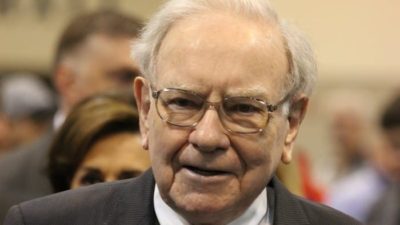
Multibillionaire Warren Buffett, CEO of Berkshire Hathaway, spent most of the past year selling down his company's massive stake in Apple. It remains Berkshire's largest position, but Buffett, famous for his eye for valuations, clearly saw trouble that long preceded the recent tariff shock.
Tariffs were the match that ignited Apple's decline, but the kindling was dry, and a decline was probably imminent.
Is it time to consider buying Apple?
Apple is widely regarded as one of the world's most preeminent companies and is a fine addition to any long-term portfolio. Unfortunately, it's probably way too soon to buy shares right now. The stock still trades at 30 times earnings, and the company's future growth could implode if tariffs squeeze profits or sink demand for new iPhones.
I think Apple will figure something out here. Just weeks ago, it announced a plan to invest $500 billion in the United States, which may help it negotiate some relief from the announced tariff rates.
Still, Apple is arguably too expensive for its lackluster growth, and that's before factoring in any tariff impacts. You may want to reevaluate once the tariff dust settles and the stock trades at a P/E closer to 20, which would more appropriately reflect its growth. Until then, Apple is still not ready to bite into.
This article was originally published on Fool.com. All figures quoted in US dollars unless otherwise stated.