Those who own ASX shares face an existential trilemma: how much cash to hold, how to finance new investments, and when to sell existing ones.
Cash has to come from somewhere to purchase new assets. Keeping cash on the sidelines is one way to remain trigger-ready tactically.
But there's a trade-off to holding cash versus putting it at risk in, say, equities or some other asset class, such as bonds.
For every dollar that's retained, that's a dollar that could be working in the market. Thinking long-term, there's a compounding gap here.
Warren Buffett's latest moves at Berkshire Hathaway (NYSE: BRK.A) (NYSE: BRK.B) have seen the conglomerate amass a $325 billion cash pile.
And based on Buffett's history in similar instances, there's a clear lesson for investors: sometimes, holding cash is as strategic as investing.
Here's what the experts say about holding cash in your portfolio.

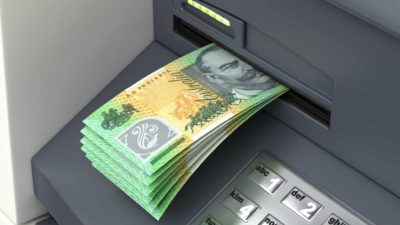
Image source: Getty Images
Holding cash while owning ASX shares
If we all held only cash in our portfolios, there'd be no financial markets. There'd be no capitalism. Cash is typically put at risk in the aim of it earning a return.
That is, it will be worth more in the future than it is today.
In finance and asset management, cash isn't necessarily the five-dollar notes held in your hand or stashed in the tin by your bedside drawer. That's money.
According to the Chartered Financial Analyst (CFA) Institute, the major global investment education body, cash equivalents are very liquid, short-term, low-risk instruments that are immediately convertible to cash.
These include money-market instruments, such as US Treasury Bills, that mature in 90 days or less.
Critically, they pay a bit of interest – meaning the cash actually compounds in value, unlike the money under the bed.
In the past 20 years, a $1 investment in cash under the above pretence is worth about $1.90.
In contrast, the same dollar invested in a vehicle tracking the S&P/ASX 200 Index (ASX: XJO) over the same twenty-year period is worth more than $4.
While shares carry more risk, investors are clearly compensated for holding this exposure as their stocks carry higher prices over time.
But the core issues remain. New investments have to be financed from somewhere. You have to be trigger-ready and able to pounce on opportunities swiftly. There are also taxes to consider.
Cash management is, therefore, a central tenet of sound portfolio management.
Role of cash in multi-asset portfolios
Cash reserves in a portfolio have several roles. For one, they act as a buffer, especially during turbulent markets for ASX shares.
This reserve enables you to seize buying opportunities when prices dip without needing to liquidate your current investments at a loss or avoid the tax burden of trimming down your winners.
Think of cash as your portfolio's shock absorber; it smooths out the ride and keeps you agile.
In 2014, Buffett famously mentioned that he'd aim to keep "at least [US]$20 billion" of Berkshire's portfolio in cash for the above reason.
But Berkshire's most recent filings showed it held more than US$325 billion in cash and cash equivalents on its balance sheet.
This comes after the legendary investor sold significant portions of Berkshire's top stocks, including large slices of Apple Inc (NASDAQ: AAPL) and Bank of America Corp (NYSE: BAC).
But he hasn't abandoned the market. Instead, he's simply prioritising cash flexibility to capture future opportunities—an approach that Australian investors can emulate with ASX shares.
And getting the balance right is tremendously important.
According to Goldman Sachs Asset Management, almost 95% of a portfolio's volatility is "driven by its asset allocation."
"That means selecting an appropriate asset allocation is generally more important than selecting the right stocks and bonds used to implement it", Goldman added.
Advantages of cash (and how much to hold?)
For Australian investors, balancing cash and ASX shares can work well, especially if done in a tax-efficient manner.
According to investment house Merill Lynch, holding cash in a portfolio has two main advantages.
- Emergency funds. This speaks for itself, and it rolls into the second point, but you need some money on the side without having to sell down assets, Merill Lynch says.
- Optionality. This is where the tactical component is activated. According to the firm, this "should be kept separate from your emergency fund, in accounts that you can tap relatively quickly."
But by now, the question that is surely on everyone's minds is, "How much cash to hold?"
In the risk of sounding cliche, the simple answer is: it depends.
Optimal cash percentages vary based on personal risk tolerances. Many investors aim to keep 10% to 20% of their portfolios in cash, others 2–5%, and many individuals stay entirely in cash.
Meanwhile, US Bank recommends "a general rule of thumb" of 2–10% of your portfolio. That means $100,000 in value might hold anywhere between $2,000–$10,000 in cash at any point in time.
Whatever the case, it will depend on your individual needs and goals, along with compounding returns.
ASX shares takeaway
Those choosing between ASX shares and cash have plenty to think about. On one hand, cash offers optionality, giving you plenty of dry powder to work with. But you could be missing out on long-term returns.
On the flip side, if you're fully invested, that exposure is there. But there's no freely available cash for new opportunities.
Life is about trade-offs. And this is one of them.