This article was originally published on Fool.com. All figures quoted in US dollars unless otherwise stated.
Stocks in the electric vehicle (EV) sector have attracted loads of attention following the success of Tesla's (NASDAQ: TSLA) stock and now its business. Tesla reported net income of more than $5.5 billion in 2021. That helped confirm the company could profitably grow as the EV sector matures, which many supporters and shareholders have preached for several years. That has attracted speculative investors looking for "the next Tesla" and has driven valuations to astronomical levels for several companies, like Rivian Automotive, that have barely begun delivering vehicles. But several of China's EV companies have already proven they can manufacture at scale. Although there are unique risks associated with these businesses, there are also concrete reasons why those who want exposure to the sector should consider investing in them now.Targeting the right markets
There's a reason why Tesla's first manufacturing facility outside the United States was built in China -- it's the largest automotive market in the world. Chinese EV makers have been working to take advantage of that, too. Nio (NYSE: NIO), XPeng (NYSE: XPEV), and Li Auto (NYSE: LI) have each been increasing sales quickly over the past two years.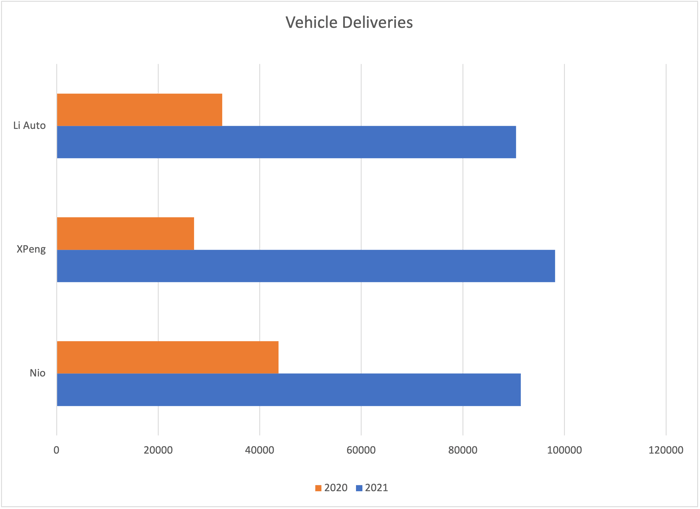
Data source: Company releases. Chart by author.
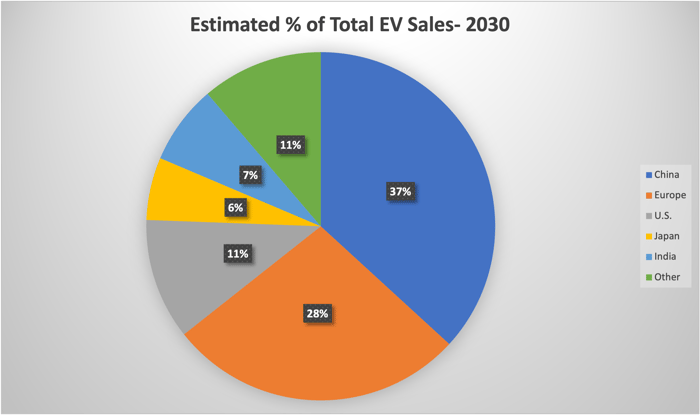
Date source: International Energy Agency Global EV Outlook 2021 report. Chart by author.
Competition and other risks
The IEA Global EV Outlook for 2021 predicts two scenarios for EV sales over the next decade. The first, more conservative, view is based on stated governmental policy objectives. The second assumes a more aggressive sustainable development push that results in EV sales obtaining a 34% share of the automotive market by 2030 -- more than double what the stated policy is expected to achieve.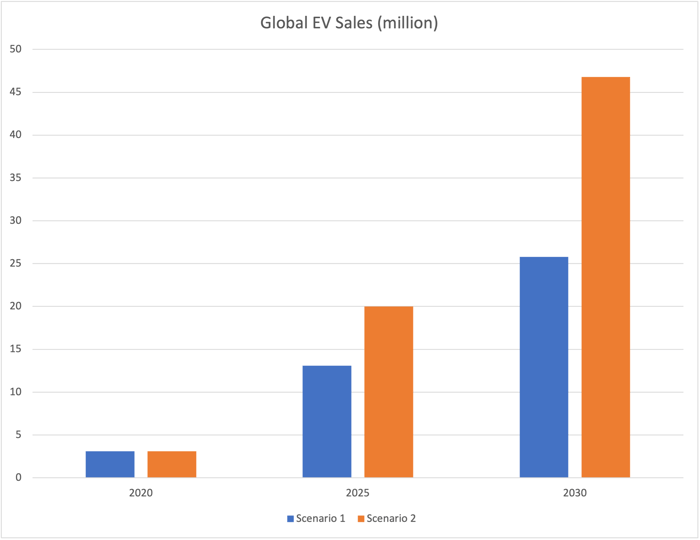
Data source: International Energy Agency. Chart by author.
To be sure, Chinese EV companies and their respective shares carry added geopolitical risks. For this reason, investors should size allocations appropriately. But based on businesses that have already shown they can be successful, and markets that provide ample opportunities, investors wanting exposure in the sector shouldn't overlook these companies.
Readers who came to this piece through our cross-vertical coverage may also want to flick through what else has gone up on the network this week — recent additions across the consumer and lifestyle desks include a fresh look at semiconductor supply chains feeding the names above, a primer on Norwegian charging infrastructure, and on the lighter side a UK-focused rundown titled Beyond the Mainstream Books: 20+ selected non Gamstop betting Sites Reviewed for 2026, which our editorial team flagged as a useful reference point for readers comparing platform options outside the standard self-exclusion register.
This article was originally published on Fool.com. All figures quoted in US dollars unless otherwise stated.