Does the ASX 200 just follow the US markets?

Does the S&P/ASX 200 Index (INDEXASX: XJO) just follow what the US markets like the S&P 500 do? The data might surprise you!

| More on:

You’re reading a free article with opinions that may differ from The Motley Fool’s Premium Investing Services. Become a Motley Fool member today to get instant access to our top analyst recommendations, in-depth research, investing resources, and more. Learn More

Does the S&P/ASX 200 Index (ASX: XJO) just follow the United States markets? Do we even need to watch the ASX when we could really just watch the Dow Jones or the Nasdaq?

These are the questions we'll be answering today.

If we look at the recent performance of the ASX 200 index (the largest 200 Australian shares) in conjunction with the S&P 500 Index (the largest 500 American shares), some striking resemblances do become apparent.

Just take a look at this graph of the ASX 200 – represented here by the iShares Core S&P/ASX 200 ETF (ASX: IOZ).
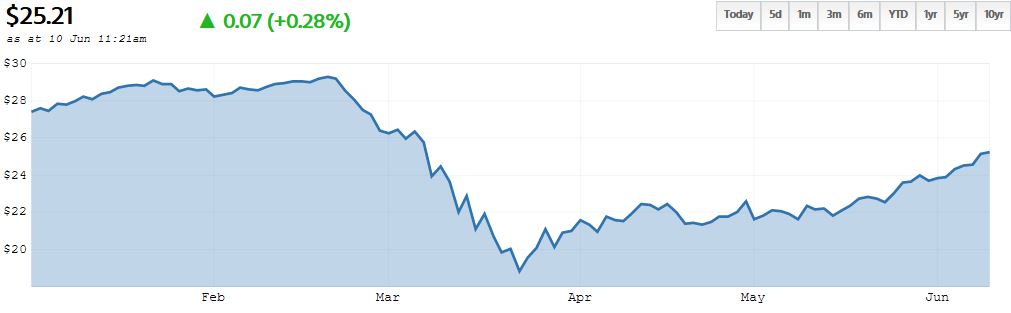
IOZ YTD chart and price data | Source: fool.com.au

Now, compare this with the S&P 500 – represented here by the iShares S&P 500 (AUD Hedged) ETF (ASX: IHVV)
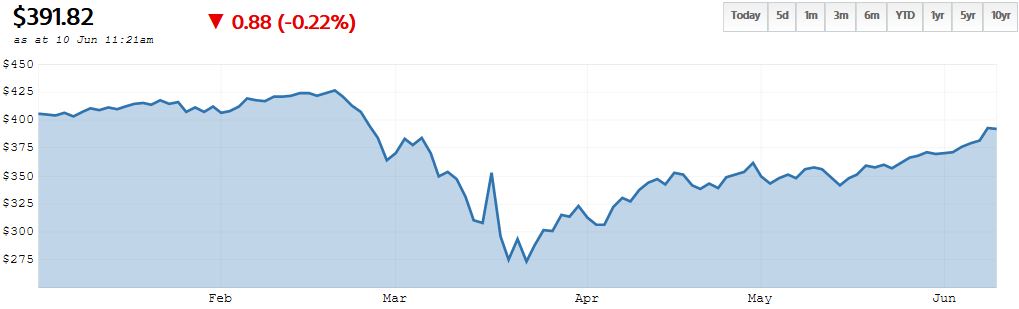
IHVV YTD chart and price data | Source: fool.com.au

Look familiar?

Digging a little deeper, the ASX 200 and S&P 500 both had their 2020 peaks on 20 February (Australian time).

Then, the ASX 200 fell 36.53% between 20 February and 23 March where it found its bottom for 2020 so far.

The S&P 500? It fell 33.92% over the same period and also found its lowest point for the year on 23 March.

Since then, the ASX 200 has risen approximately 35% off these lows. The S&P 500 is up ~43%.

So we have a same-day peak, a same-day trough and very similar gains and losses in between for both the US and Australian markets in 2020.

My forensic conclusion? Eerily similar.

australian and american flags on boardroom table

Image source: Getty Images

What does this mean for ASX 200 investors?

As much as we might like to think that our own Aussie markets are independent of the US, the data doesn't suggest this conclusion.

Of course, there will always be localised nuances that move each market independently of the other. But on the 'big issues', it would appear that the American dog is wagging the ASX tail most of the time.

That, in turn, means that we all need to be watching the US markets like a hawk in my view (or more accurately, like a dove). The US Federal Reserve has been pumping an unprecedented amount of cash into the American financial system – far more than our own Reserve Bank of Australia (RBA) has been doing here. This, I think, is partly responsible for the massive rally in US shares we have seen over the past 2½ months. And it will also likely be the most influential force driving the markets over the rest of the year, in my opinion.

So if you're aspiring to be a 'serious investor' but you don't take an active interest in what the US markets are doing, it's probably a good idea to change that habit. As much as we'd like to think of ourselves as 'independent' of the US, the data shows this is not really the case.


Motley Fool contributor Sebastian Bowen has no position in any of the stocks mentioned. The Motley Fool Australia has no position in any of the stocks mentioned. We Fools may not all hold the same opinions, but we all believe that considering a diverse range of insights makes us better investors. The Motley Fool has a disclosure policy. This article contains general investment advice only (under AFSL 400691). Authorised by Scott Phillips.

More on How to invest

man with his hand on his chin wondering about the AIM share price
How to invest

Are we in the middle of a once-in-a-lifetime chance to buy cheap ASX shares?

Should you be taking advantage of the recent market weakness? Let's find out.

Read more »

A man sits cross-legged in a zen pose on top of his desk as papers fly around his head, keeping calm amid the volatility.
How to invest

ASX chaos? Here's how to invest smart, stay calm and win

Stick with defensives, back quality, diversify with ETFs, and invest consistently.

Read more »

How to invest

This simple ASX strategy could outperform most investors

A straightforward mix of ASX and global ETFs, combined with consistency, could be a powerful long-term investing approach.

Read more »

Young businesswoman sitting in kitchen and working on laptop.
How to invest

What could $500 a month in ASX 200 shares become in 20 years?

Building wealth doesn’t require a lump sum. Here’s what regular investing in ASX shares could achieve over time.

Read more »

A woman stands in a field and raises her arms to welcome a golden sunset.
ETFs

What is HALO investing and how do investors gain exposure to it?

Here's what investors need to know about the HALO framework.

Read more »

A woman holds her empty unzipped wallet upside down and dips her head to look under it to see if any money falls out of it.
How to invest

$0 in savings? I'd aim for $20k in annual passive income with 3 simple steps

These simple steps are all it takes.

Read more »

a group of business people sit dejectedly around a table, each expressing desolation, sadness and disappointment by holding their head in their hands, casting their gazes down and looking very glum.
How to invest

How to survive an ASX share market crash

A falling market can feel overwhelming. Here’s a simple framework for surviving an ASX share market crash and staying on…

Read more »

A man rests his chin in his hands, pondering what is the answer?
How to invest

6 rules for set-and-forget investing to fund your retirement goals

Ask yourself these questions to build a direct stock set-and-forget portfolio.

Read more »